
A routine grocery run can quickly turn stressful when children start asking for candy, toys, or colorful items sitting near the checkout aisle. Many parents know the challenge of managing requests that often lead to frustration or tantrums in public.
One mother recently shared a practical supermarket strategy that has caught the attention of parents online because of its calm and respectful approach.
The parenting tip focuses on allowing children to interact with an item without immediately buying it. Instead of saying “no” right away, the mother explained that children can hold the product while shopping, as long as they understand it still belongs to the store.
She explained, “Sure, you can hold it, but it belongs to the store, not us.”
The idea gives children a sense of involvement during the shopping trip while also setting a clear boundary. By removing the pressure around instant refusal, the situation often stays calm and manageable.
How the Shopping Method Works
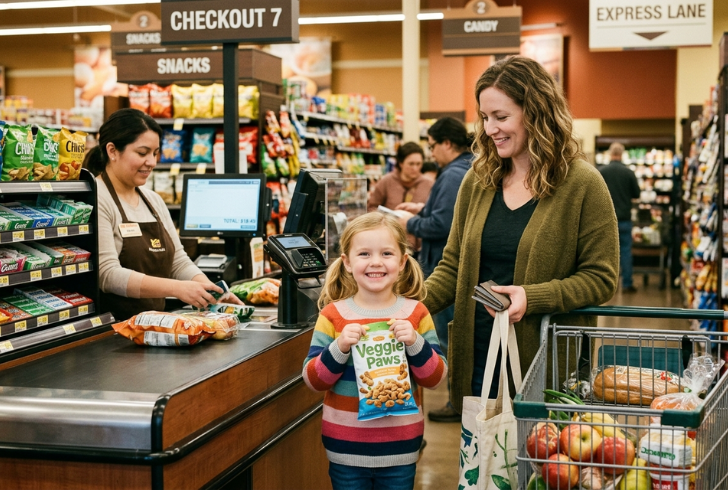
Gemini AI | Kids can carry an item while parents shop, then return it or hand it to the cashier at checkout.
According to the mother, the process stays simple from start to finish. Children may carry the toy, snack, or item around the store while parents continue shopping. Once it is time to check out, the child either returns the item to the shelf or hands it to the cashier.
The parent encourages children to say phrases such as, “This is staying here,” or “No thanks, we don’t want it.”
For younger children, the moment can even become playful. The mother shared that she sometimes turns it into a goodbye routine by saying, “Bye bye, item. See you next time!”
That small interaction appears to help children process disappointment without turning it into conflict. Instead of feeling ignored, they feel included in the decision.
The mother believes the method works because many children are interested in the excitement of the moment rather than the item itself. She explained, “Most of the time it’s the kid wanting the item in that moment, not wanting it forever.”
She also shared that the technique helped avoid “countless meltdowns” during grocery trips.
Why Parents Are Responding to the Idea
The parenting advice quickly spread online because it feels realistic and easy to apply during everyday errands. Parents often look for ways to reduce tension in public places without turning every shopping trip into a negotiation.
Several mothers and fathers shared similar strategies in response to the post.
One parent wrote, “This is a great one! Will try it.”
Another explained that they offer an alternative by creating a birthday wish list instead of buying items immediately. The parent keeps a running list in a phone notes app and allows their daughter to watch the item being added.
The comment read, “We can’t get it this time. Would you like to put it on your birthday wish list?”
The parent added that although the child could not read yet, seeing the item written down made her feel heard and respected. Some products later remained on the list long enough to become birthday gifts.
Another user admitted to quietly removing products from the shopping cart when their child became distracted elsewhere in the store.
One commenter summed up the reaction online by calling the strategy “a God tier hack.”
Adapting the Trick as Children Get Older

Freepik | Using quick parenting strategies like patience and clear boundaries keeps supermarket trips stress-free.
The mother also explained that the method changed slightly as her son grew older. Instead of carrying items around the store, he now simply looks at products he likes while understanding they will not be purchased that day.
She shared another small adjustment that helps avoid disappointment later. If her son still seems interested, she takes a photo of him with the item so they can revisit it another time.
That approach creates a sense of acknowledgment without adding pressure to buy something immediately.
Small parenting techniques can make a noticeable difference during daily routines, especially in environments that attract children’s attention. This supermarket strategy combines patience, communication, and clear boundaries to avoid shopping becoming a struggle.
By involving children while maintaining limits, it can lead to calmer trips and fewer emotional outbursts, with simple, consistent and empathetic approaches often working better than strict refusals.