Reusable bags can solve one household problem while quietly creating another. A few sturdy totes make grocery trips easier, but free bags from stores, events, conferences, and community giveaways can quickly turn into a crowded pile under the sink.
The good news is that most homes do not need a large stash. Keeping the bags that get regular use and donating the extras can free up storage without wasting useful items.
Why Reusable Bags Add Up
Professional home organizer Britnee Tanner often sees the same pattern when working with clients. Extra reusable bags end up under kitchen sinks, inside pantries, or in other forgotten corners.
“They just are sneaky,” said Tanner, who lives in Salt Lake City. She noted that some bags come from purchases, while others appear at home without anyone remembering exactly where they came from.
Reusable totes come in many forms, including canvas, cloth, and thicker plastic. They are designed to last longer than single-use shopping bags, but that durability can make it easy to keep more than necessary.
Single-use plastic shopping bags create environmental concerns because they can break apart into smaller plastic particles and persist in the environment. Twelve U.S. states have banned single-use plastic shopping bags, while several cities and towns have introduced bag taxes or other restrictions.
That shift has encouraged more shoppers to carry reusable alternatives. A small collection can work well for groceries, library books, lunches, and other errands. The problem starts when the collection grows beyond what a household can realistically use.
Reuse Matters More Than Quantity
Reusable bags still require resources to manufacture. Cotton bags, for example, depend on water and other resources during production. The environmental cost also differs based on the material, construction, and durability of each bag.
Researchers have found that the number of uses needed to offset a bag's production impact varies widely. Thicker and more durable bags can require more repeated use because their production generally carries a greater environmental burden than that of lightweight plastic totes.
Environmental scientist Shelie Miller of the University of Michigan explained the basic principle clearly: reusables “are generally good for the environment, with the caveat that they have to be reused.”
There is no universal number of trips that makes every reusable bag environmentally worthwhile. What matters is using existing bags for a long time rather than continually collecting new ones.
Environmental economist Kimberly Oremus has used her reusable bags for as long as a decade. That kind of extended use can help spread the environmental cost of manufacturing over many shopping trips.
Keep the Bags That Have Purpose
The easiest way to control the pile is to stop bringing unnecessary bags home. However, forgetting a tote does not have to mean buying another one.
When Oremus leaves her reusable bags behind, she asks store employees whether empty cardboard boxes are available. A cardboard box can handle a grocery trip without adding another reusable tote to the household.
“If you forget it, it’s not the end of the world,” Oremus said.
For an existing collection, Tanner recommends choosing the bags that are in the best condition and giving each one a specific purpose. A few can stay in the car for groceries, while another can hold library books or packed lunches.
Storage also matters. Returning each bag to its designated spot after use makes it easier to remember and reuse. A tote kept in the car, for example, is more useful than one buried behind several others in a pantry.
Donate the Extras
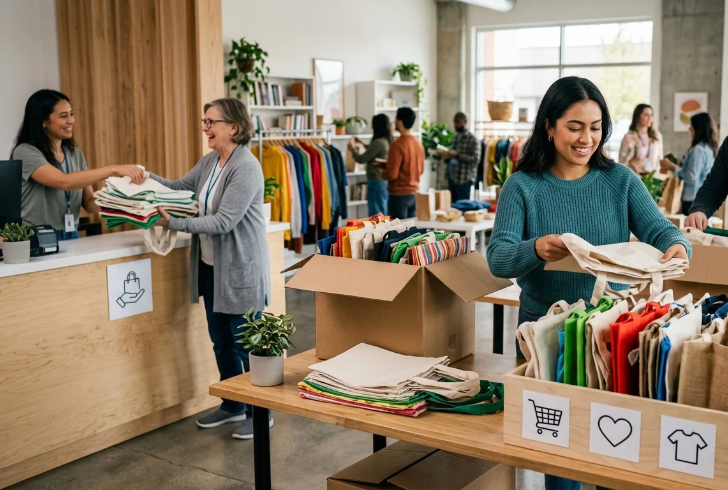
Gemini AI | Put excess reusable bags to good use by handing them off to thrift stores, shelters, and local shops.
Once the favorites have been separated, usable extras can go to people who need them. Friends, thrift stores, food banks, and some community organizations may accept clean reusable bags.
Tanner takes extra bags to thrift stores. Other organizations use them for practical needs. Las Vegas Books accepts reusable bags for customers who need one while shopping at the used bookstore in Nevada. The Burbank Animal Shelter in California uses larger totes to carry pet food, toys, and other supplies.
The Community FoodBank of New Jersey has collected reusable bags since 2022 for people visiting its food pantries. The organization accepts bags that are reasonably clean and free of major damage.
“They’re always something that our pantries need, and that we have available on hand whenever we can,” said Elizabeth McCarthy, president of the organization.
Before donating, check the bag for stains, tears, broken handles, or other damage. A clean, usable tote has a better chance of serving someone else.
What to Do With Worn-Out Bags
Reusable bags that can no longer serve their original purpose may need a different solution. Most cannot go into standard curbside recycling programs because their materials and construction do not fit those systems.
Oremus continues using her bags until they are no longer practical. When they reach that point, she donates the scraps to textile recycling centers where such programs are available.
That approach keeps useful materials in circulation for as long as possible. It also avoids replacing a worn bag simply because it no longer looks new.
A crowded cupboard does not make reusable bags more sustainable. A smaller group of durable bags that gets used again and again can serve the same purpose with less clutter.
Keeping the most useful totes, giving them regular jobs, and donating clean extras creates a simple system. It also makes the bags easier to find when they are needed.
The goal is not to collect as many reusable bags as possible. It is to make the bags already owned useful for as long as they can be.