
Baking a pie can be deeply satisfying—until the crust betrays you with tiny cracks. Left unchecked, these fissures let filling seep through, leaving a limp, soggy bottom. Thankfully, there’s a low-effort fix professionals swear by.
Known as “pie spackle,” this method seals weak spots quickly, keeping the filling exactly where it should be.
Why Pie Crusts Crack
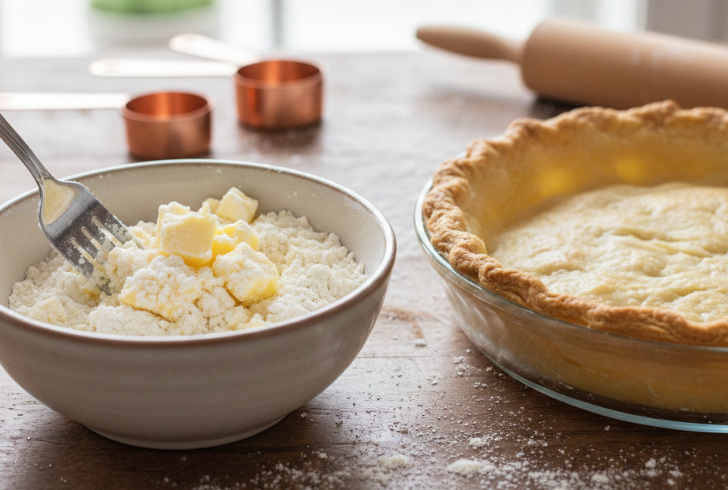
Gemini AI | Pie spackle—a mix of flour and butter—seals cracks, keeping crusts firm and flaky.
Cracks often appear during blind or partial baking, especially when the dough dries out or shrinks. Once a fissure forms, the liquid filling can leak through, softening the crust and ruining its texture. Even seasoned home bakers encounter this issue, which is why pastry pros rely on quick fixes rather than starting over.
Bridget Vickers, pastry and baking chef-instructor at the Institute of Culinary Education, explains that pie spackle is a standard professional fix.
“... [It] is a typical, professional hack for patching cracks or holes in a pre-baked (or partially baked) pie crust,” Vickers said. She noted that the mixture works as a temporary seal. “... The flour is highly absorbent, and the butter melts slightly, then sets, creating a barrier that prevents the wet filling from seeping through the cracks and making the crust soggy.”
How Pie Spackle Works
Pie spackle relies on familiar pantry ingredients, which helps it blend seamlessly into the crust. While brushing a lightly beaten egg onto a weak crust can help with structure, a flour-and-butter mixture delivers better flavor and performance.
Vickers recommends a precise ratio for reliable results:
4 tablespoons flour
2 tablespoons melted butter
A small pinch of sugar
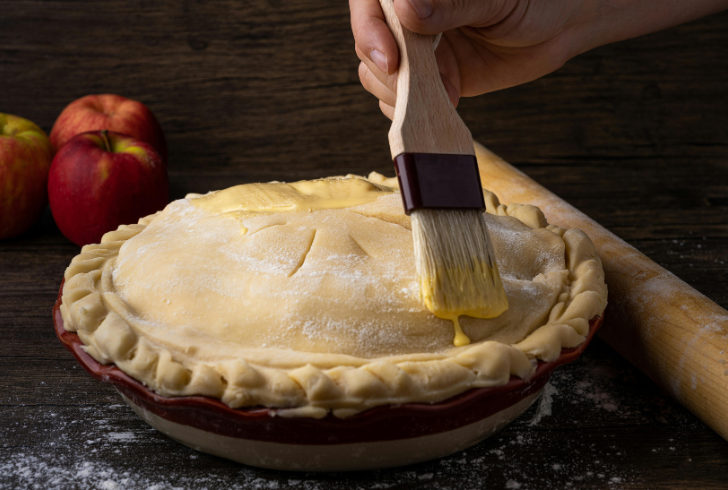
Pexels | Skyler Ewing | Using egg wash or pie spackle helps bakers strengthen crusts fast without losing flavor or shine.
The ingredients should be stirred until a thick, moldable paste forms. Vickers compared the texture to “a Play-Doh consistency,” which makes it easy to press into cracks without spreading too thin.
Once applied, small amounts of the paste are pressed directly into the damaged areas. The crust then goes back into the oven, where the spackle bakes into the dough. As it sets, the patch becomes nearly indistinguishable from the rest of the crust, both in look and texture.
When to Use Pie Spackle for Best Results
This technique works best on pre-baked or partially baked crusts that show early signs of cracking. It also helps reinforce thin spots before filling is added. Since flour, butter, and sugar are already core elements of pie dough, the repair does not affect taste or flakiness.
Beyond preventing leaks, pie spackle protects the crust from absorbing excess moisture later on. That means a firmer base and a cleaner slice once the pie is served.
Pie spackle offers a practical way to rescue a crust without extra tools or wasted dough. It addresses cracks as they appear, preserves texture, and keeps fillings contained through the final bake.
For anyone aiming for consistent pie results, this simple fix turns a common setback into a manageable step in the process.